
Liplyn and HaxUnit announce strategic partnership for Data, AI and Cybersecurity
Liplyn partners with HaxUnit, combining 20 years of data and AI Search expertise with continuous attack surface monitoring and NIS2-readiness support.
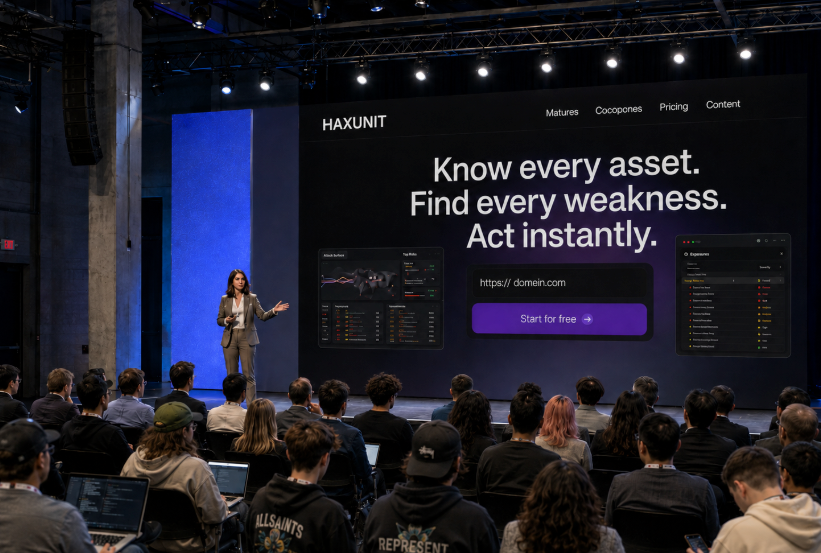
HILVERSUM, June 6, 2026 — Liplyn Group today announces a strategic partnership with HaxUnit. Through this collaboration, Liplyn strengthens its positioning as a data and AI consultancy for organizations that want to improve their digital visibility while also understanding their exposure to cybersecurity risks, data misuse and AI-driven manipulation.
The partnership comes at a time when organizations around the world are facing a new reality: data is not only a source of growth, marketing performance and artificial intelligence, but also a potential entry point for attackers. Public company information, leaked datasets, poorly secured digital assets, shadow IT, outdated software, unmanaged APIs and misconfigured systems can now be discovered, analyzed and exploited faster than ever before.
Artificial intelligence is accelerating this development. The same technologies that help organizations structure information, automate research and improve decision-making can also be used for reconnaissance, phishing, profiling, vulnerability discovery, social engineering and large-scale cyberattacks. As a result, companies need to understand not only how they appear in search engines and AI systems, but also what attackers, crawlers, competitors and automated tools can discover about them.
Liplyn brings twenty years of experience in collecting, structuring, enriching and applying data at scale. The company helps brands and organizations become more visible in search engines, AI Search tools and generative AI systems such as ChatGPT, Perplexity, Gemini, Google AI Overviews and Claude. From that expertise, Liplyn also sees the other side of the data economy: what is findable for customers, journalists and AI models may also be findable for malicious actors.
HaxUnit adds a technical cybersecurity layer to this proposition. Its platform continuously maps external attack surfaces, discovers digital assets, analyzes exposed services, identifies vulnerabilities and helps organizations prioritize risks before attackers can exploit them. Together, Liplyn and HaxUnit aim to help organizations become not only more visible, but also more aware of what is visible, scannable, vulnerable or open to manipulation.
"AI is not only changing how brands are found. It is also changing how organizations are attacked," said Luke Liplijn, founder of Liplyn Information Group. "For the past twenty years, I have worked with large-scale data. I have seen how powerful data can be for growth, intelligence and decision-making. But the same principles — collecting, combining, enriching and automating information — can also be used for cyberattacks, profiling, phishing, disinformation and digital sabotage. With HaxUnit, we add a crucial layer: insight into what attackers can see before they strike."
According to Liplyn, a new category of consultancy is emerging at the intersection of data intelligence, AI Search visibility and cybersecurity. Companies are no longer only asking how they can become visible in AI-generated answers. They are also asking what data AI systems, crawlers, attackers and competitors can collect about them.
This raises increasingly urgent questions. Which domains, subdomains and systems are publicly visible? Which APIs, endpoints and services are exposed? Which company information can be used for phishing or social engineering? Which outdated assets are still online? Which datasets, publications, vacancies, executive profiles or media mentions create unintended risk? And how should organizations prepare for stricter cybersecurity regulation, including NIS2 in Europe, while AI makes the threat landscape faster and more scalable?
Three core areas of the partnership
1. Data & AI Risk Intelligence
Liplyn helps organizations understand which public and semi-public data about their brand, executives, employees, domains, entities, vacancies, news coverage and broader digital footprint is discoverable. This intelligence is connected to risks around AI Search, reputation, phishing, social engineering, data misuse and manipulation.
This is especially relevant in an era where generative AI systems summarize, interpret and recommend organizations based on publicly available information. A company''s digital footprint is no longer just a marketing asset. It is also a risk surface.
2. Attack Surface Monitoring
HaxUnit maps external digital assets, including domains, subdomains, IP ranges, open ports, services, endpoints and known vulnerabilities. This allows organizations to see where technical risks are emerging and where attackers may find opportunities.
Continuous monitoring is increasingly important because digital environments change constantly. New tools are added, old systems remain online, cloud services are misconfigured, test environments become publicly accessible and forgotten assets continue to create exposure.
3. AI Search & Cyber Resilience Strategy
Liplyn combines AI Search Visibility, structured data, content intelligence and digital PR with cybersecurity insights from HaxUnit. The goal is to help organizations build a strategy in which digital visibility and digital resilience are developed together.
"Many companies still treat AI, SEO, data and cybersecurity as separate disciplines," Liplijn added. "That is no longer sustainable. The same data that makes a brand visible in AI Search can also be used to attack an organization. Marketing, data, compliance, security and leadership teams need to work much more closely together."
The collaboration is particularly relevant for mid-sized and large organizations in sectors where digital trust, data, reputation and compliance are critical. These include technology, SaaS, recruitment, media, finance, real estate, government, healthcare, education, e-commerce and professional services.
Liplyn and HaxUnit will jointly develop propositions including AI Search Visibility Audits, Digital Footprint Risk Audits, Attack Surface Assessments, NIS2-readiness support, executive exposure scans and AI-era cybersecurity workshops for leadership teams.
The partnership also reflects a broader shift in how companies need to think about visibility. For years, organizations have optimized their online presence for Google, social media, digital PR and conversion. The rise of generative AI adds a new layer: organizations now need to understand how AI systems interpret them, recommend them and connect them to other entities, topics and sources.
At the same time, cybersecurity teams need better insight into the public data layer around their organization. Attackers do not only look for technical vulnerabilities. They also use company information, staff profiles, job postings, press releases, supplier relationships, domain records and public datasets to build targeted attacks.
By combining Liplyn''s expertise in data, AI Search and media intelligence with HaxUnit''s cybersecurity monitoring capabilities, the partnership aims to provide organizations with a more complete view of their external digital reality.
"Visibility without control creates risk," said Liplijn. "Our goal is to help organizations become visible in the right places, understood by the right systems and protected against the wrong actors."
About HaxUnit
HaxUnit is a cybersecurity platform for continuous attack surface monitoring, asset discovery, vulnerability assessment and risk prioritization. The platform helps organizations monitor their external digital footprint, identify exposed services and vulnerabilities, and translate technical risk signals into actionable security workflows for IT, security and management teams.
Contact
Luke Liplijn — Liplyn Information Group
Marathon 9a, 1213 PE, Hilversum, The Netherlands
+31 20 308 6934 — www.liplyn.com
How secure is your organisation?
We map your attack surface and help you close the gaps in your security and infrastructure.
Explore CybersecurityFrequently Asked Questions
Have questions about this topic? Here are the most frequently asked questions.